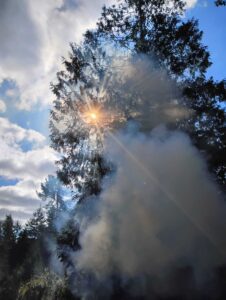
Biochar burning (AKA pyrolyzing woody biomass in low‑oxygen conditions) is a smart and simple way to use unwanted branches and brush around your property to support ecosystem health: instead of open burning, where carbon in wood combines with oxygen to form CO2, the biomass is burned slowly in low oxygen so more carbon is left behind as stable charcoal instead of being converted to smoke and ash. That charcoal, often called biochar when not used as a fuel, can then be added back into the soil, where its porous structure helps to hold water, support soil microbes, and store carbon for centuries longer than if the wood was left to rot.
Humans have been using what we now call biochar for at least 2,000–2,500 years, and probably millenia longer. The best‑known early examples come from Indigenous farmers in the Amazon Basin, who created the rich black soils called terra preta (Portuguese for “black earth”) by adding charred organic matter, bones, and other wastes to otherwise poor tropical soils. Archaeological and soil studies suggest these practices became more widespread in the region several centuries BCE (around 400–500 BCE) and continued for many generations.
People in Europe and Asia were also mixing charred plant residues into garden soils by the 1600s, and scientists began formally studying “agricultural charcoal” as a soil amendment in the 19th century. The word “biochar” itself, though, is very recent and only came into common use in the late 20th and early 21st centuries as researchers revisited terra preta and its climate benefits.
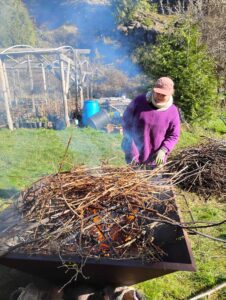
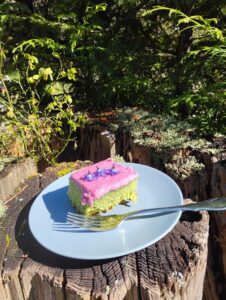
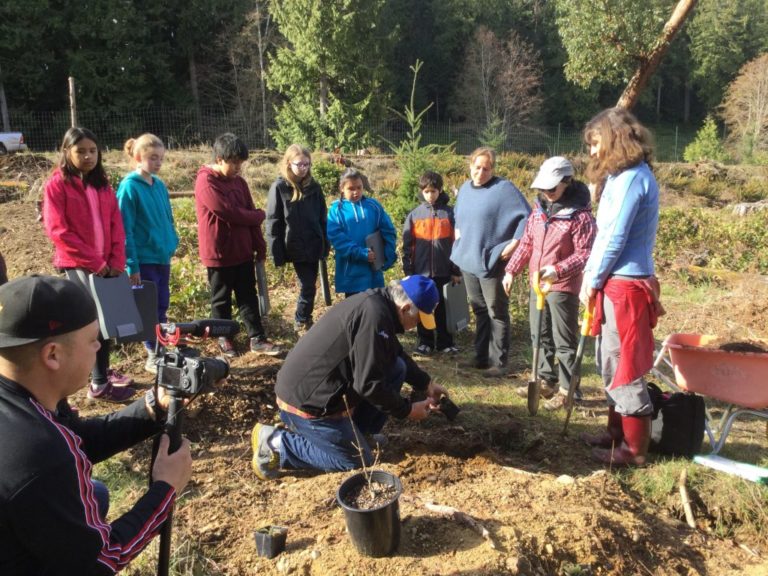
On March 14th, 2026, the Galiano Conservancy Association hosted a hands‑on biochar burning session where volunteers gathered in the Food Forest to carefully burn chipped brush and woody debris using a purpose-built biochar kiln that creates the low-oxygen conditions necessary. Participants learned how to set up and monitor a biochar kiln, explored the climate and soil benefits of the practice, and left with a stronger understanding of how small‑scale biochar production can support both land‑health and carbon‑management goals on Galiano Island. Oh, and if you weren’t there, here’s a photo of the wonderful Food Forest nettle, elderberry and borage cake that was served to the workshop participants, carefully prepared by our lovely Land Stewardship and Operations Lead, Lúthien Teel!