Harvest is about more than gathering crops, it is also cultivating resilient ecosystems, strengthening community connections, and ensuring that healthy, locally grown food remains accessible for generations to come.
At the Galiano Conservancy Association (GCA), the sustainable food systems program brings together nature stewardship, hands-on education, and local food production to demonstrate that both communities and ecosystems flourish when people work with nature rather than against it.
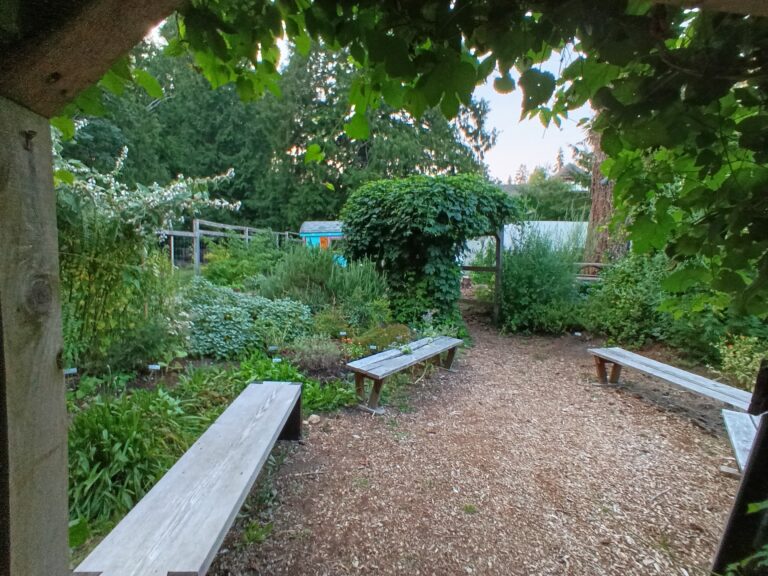
A cornerstone of this work is the Galiano Conservancy’s Food Forest, a living example of agriculture inspired by natural ecosystems. Established in 2015, the Food Forest is designed to mimic the structure of a healthy forest, with layers of canopy trees, shrubs, herbs, vines, root crops, and ground cover. Each plant in the Food Forest serves multiple purposes: producing food, enriching the soil with nitrogen, creating natural mulch, providing habitat, and supporting pollinators. This designed diversity creates a productive and resilient growing system that requires less water, fertilizer, and maintenance than many conventional agricultural methods while continuing to produce abundant harvests.
Producing food sustainably also means using water wisely. With increasingly dry summers in the Gulf Islands, the GCA has adopted a range of water conservation techniques that help the Food Forest thrive while reducing reliance on groundwater. Drip irrigation delivers water directly to plant roots, minimizing evaporation and runoff, while traditional ollas (unglazed clay pots buried in the soil) slowly release moisture where plants need it most. Rainwater collection systems capture valuable winter rainfall, and a large capacity hand-made ferro-cement cistern provides long-term water storage for the growing season. A solar-powered pump and gravity efficiently distribute stored rainwater throughout the Food Forest using renewable energy, further reducing the site’s environmental footprint. Organic mulch spread around trees and garden beds helps retain soil moisture, suppress weeds, regulate soil temperature, and reduce evaporation, allowing plants to thrive with less irrigation. This growing season was the first the GCA tried dry farming, a way of growing food with no additional irrigation, only rainwater. Seeds bred for this purpose were sourced from Tardigrade farm on Salt Spring and were successful in a test plot, and are now being fermented and dried and will soon be available in the community. Although it was not a wet growing year, the dry farmed test plot successfully grew heritage Italian tomatoes, celosia spinach, a bolt resistant cilantro and cow peas. Together, these water saving practices demonstrate thoughtful water management, which is essential to sustaining healthy ecosystems and future yields.
The GCA harvests fresh greens, herbs, edible flowers, berries, and root vegetables that are supplied to local restaurants and available to purchase at the Conservancy’s farm stand. Herbs grown in the Food Forest are also used to create Forest Garden Tea, demonstrating how locally grown products can support both the community and the local economy. Today the Food Forest is home to more than 100 species of food bearing plants.
Harvest is also an opportunity to bring people together. Seasonal U-pick berry harvests provide residents and visitors with an affordable way to enjoy fresh, locally grown fruit while experiencing the Food Forest firsthand. Beyond providing access to healthy food, U-picks foster a deeper appreciation for where food comes from and the care required to grow it sustainably.
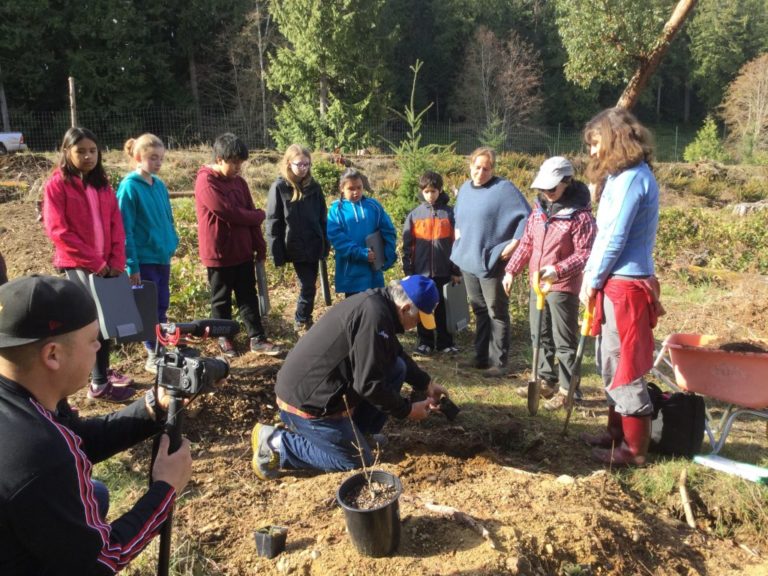
Volunteers play an extremely important role in the Conservancy’s food sustainability initiatives. By helping with planting, weeding, harvesting, and caring for the Food Forest, volunteers gain practical skills in ecological gardening while contributing to local food
security. These shared experiences create opportunities to learn from one another, build relationships, and strengthen the sense of community that is essential to a resilient local food system.
The Galiano Conservancy’s commitment to sustainable food systems extends beyond the Food Forest through its Native and Edible Plant Nursery. The nursery offers a wide selection of native and food bearing plants that are well adapted to the unique climate of the Gulf Islands. Whether restoring habitat, creating wildlife-friendly landscapes, or planting productive home gardens, visitors can find both the plants and the knowledge needed to grow successfully while supporting local biodiversity. The nursery is open to the public and offers more than 200 species of native plants that help strengthen the island’s ecological resilience.
As interest in food security and sustainable agriculture continues to grow, the Galiano Conservancy demonstrates that healthy harvests begin with healthy ecosystems. By combining ecological growing practices, innovative water conservation, locally adapted plants, community education, volunteer opportunities, and accessible programs such as U-picks, the GCA is cultivating a future where both nature and people can thrive.